
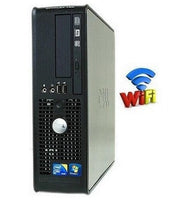
The Dell Optiplex 780: A Reliable Business Desktop Computer
The Dell Optiplex 780 is a well-known and reliable business desktop computer that has been a popular choice for many organizations. Released by Dell in 2009, the Optiplex 780 was designed to meet the needs of businesses looking for a dependable and cost-effective desktop solution.
Featuring Intel Core 2 Duo processors, up to 8GB of DDR3 RAM, and various storage options including hard disk drives and solid-state drives, the Optiplex 780 offered solid performance for everyday business tasks.
One of the key features of the Optiplex 780 was its compact and easily serviceable design. With a small form factor or mini tower chassis, it was easy to access components for upgrades or maintenance, making it a practical choice for IT departments managing multiple systems.
In terms of connectivity, the Optiplex 780 offered a range of ports including USB, audio jacks, VGA, DisplayPort, and Ethernet, ensuring compatibility with a variety of peripherals and networking devices.
Overall, the Dell Optiplex 780 was praised for its reliability, performance, and ease of maintenance. It became a popular choice for businesses looking for a stable and efficient desktop computer solution.
While newer models have since been released by Dell, the Optiplex 780 remains a testament to Dell’s commitment to providing quality business desktop computers that meet the needs of organizations large and small.
Top 5 Advantages of the Dell Optiplex 780 for Business Efficiency and Reliability
- Reliable performance for everyday business tasks
- Compact and easily serviceable design for convenient maintenance and upgrades
- Variety of connectivity options including USB, audio jacks, VGA, DisplayPort, and Ethernet
- Cost-effective solution for businesses looking for a dependable desktop computer
- Stable and efficient operation that meets the needs of organizations large and small
7 Drawbacks of the Dell Optiplex 780: Understanding Its Limitations
- Limited upgrade options due to older hardware compatibility
- May struggle with demanding modern software and applications
- Lacks support for newer technologies such as USB 3.0 and HDMI
- Limited graphics capabilities for gaming or multimedia tasks
- Can be noisy under heavy load due to older cooling system design
- Energy efficiency may not be as high compared to newer models
- Limited warranty and support options due to its age
Reliable performance for everyday business tasks
The Dell Optiplex 780 stands out for its reliable performance when handling everyday business tasks. Equipped with Intel Core 2 Duo processors and up to 8GB of DDR3 RAM, this desktop computer ensures smooth and efficient operation for common office activities such as word processing, web browsing, email communication, and spreadsheet management. Its dependable performance makes it a trusted choice for businesses seeking a stable and consistent computing experience to support their daily operations.
Compact and easily serviceable design for convenient maintenance and upgrades
The Dell Optiplex 780’s compact and easily serviceable design offers a significant advantage in terms of convenient maintenance and upgrades. With its small form factor or mini tower chassis, users can easily access internal components for quick and hassle-free upgrades or repairs. This feature not only saves time but also reduces downtime, making the Optiplex 780 a practical choice for businesses and IT departments managing multiple systems. The design’s emphasis on accessibility underscores Dell’s commitment to providing user-friendly solutions that prioritize efficiency and ease of maintenance.
Variety of connectivity options including USB, audio jacks, VGA, DisplayPort, and Ethernet
The Dell Optiplex 780 stands out for its impressive array of connectivity options, catering to a wide range of user needs. With features such as USB ports for versatile peripheral connections, audio jacks for seamless audio integration, VGA and DisplayPort outputs for flexible display options, and Ethernet connectivity for reliable networking capabilities, the Optiplex 780 ensures seamless compatibility with various devices and networks. This diverse selection of connectivity options enhances the user experience by providing flexibility and convenience in connecting external devices and peripherals to the desktop system.
Cost-effective solution for businesses looking for a dependable desktop computer
The Dell Optiplex 780 stands out as a cost-effective solution for businesses seeking a reliable desktop computer. With its affordable price point and dependable performance, the Optiplex 780 offers organizations a budget-friendly option without compromising on quality or functionality. This makes it an attractive choice for businesses looking to equip their workforce with efficient and durable desktop computers while staying within their budget constraints.
Stable and efficient operation that meets the needs of organizations large and small
The stable and efficient operation of the Dell Optiplex 780 makes it an ideal choice for meeting the needs of organizations, both large and small. With its reliable performance and consistent functionality, the Optiplex 780 ensures smooth operation for businesses, allowing them to focus on their core tasks without disruptions. Its robust design and dependable hardware components contribute to its longevity and ability to handle the demands of daily business operations, making it a trusted desktop solution for organizations seeking a reliable and efficient computing experience.
Limited upgrade options due to older hardware compatibility
One notable drawback of the Dell Optiplex 780 is its limited upgrade options due to older hardware compatibility. As technology has advanced since its release in 2009, the hardware components of the Optiplex 780 may not be compatible with newer, more powerful upgrades available in the market today. This can restrict users from fully maximizing the performance potential of their system and may require them to invest in a newer model to keep up with modern computing requirements. The limited upgrade options can be a hindrance for users looking to extend the lifespan of their desktop computer without facing compatibility issues.
May struggle with demanding modern software and applications
The Dell Optiplex 780, while known for its reliability and performance in everyday business tasks, may struggle when faced with demanding modern software and applications. Due to its older hardware specifications, such as the Intel Core 2 Duo processors and limited RAM capacity, the Optiplex 780 may not be able to keep up with the resource requirements of newer and more advanced software programs. Users looking to run intensive applications or multimedia software may find the Optiplex 780 lacking in processing power and memory capabilities, potentially leading to slower performance and reduced efficiency when handling complex tasks.
Lacks support for newer technologies such as USB 3.0 and HDMI
One notable con of the Dell Optiplex 780 is its lack of support for newer technologies such as USB 3.0 and HDMI. As these technologies have become standard in modern computing, the absence of them on the Optiplex 780 can limit its compatibility with newer peripherals and displays. Users looking to connect high-speed USB devices or modern monitors may find themselves needing additional adapters or workarounds, which can be inconvenient and potentially impact overall system performance and user experience.
Limited graphics capabilities for gaming or multimedia tasks
The Dell Optiplex 780, while a reliable business desktop computer, has a notable limitation in its graphics capabilities when it comes to gaming or multimedia tasks. Due to its focus on business productivity rather than high-end graphics performance, the Optiplex 780 may struggle to handle demanding graphics-intensive applications or modern video games effectively. Users looking for a computer specifically for gaming or multimedia editing may find the limited graphics capabilities of the Optiplex 780 to be a drawback that hinders its suitability for such tasks.
Can be noisy under heavy load due to older cooling system design
The Dell Optiplex 780, despite its many strengths, has a notable con that can impact user experience: it can be noisy under heavy load due to its older cooling system design. As the system works harder to handle demanding tasks, the cooling fans may spin faster and produce more noise than desired. This issue can be a drawback for users who value a quiet working environment or require concentration during intensive computing tasks. It is important for potential users to consider this aspect of the Optiplex 780 when evaluating its suitability for their needs.
Energy efficiency may not be as high compared to newer models
While the Dell Optiplex 780 is a reliable business desktop computer, one of its drawbacks is that its energy efficiency may not be as high compared to newer models. As technology advances, newer desktop computers are designed to be more energy-efficient, helping organizations reduce their carbon footprint and lower electricity costs. The Optiplex 780, being an older model released in 2009, may consume more power than its modern counterparts, which could be a consideration for businesses looking to optimize energy usage in their office environments.
Limited warranty and support options due to its age
One significant drawback of the Dell Optiplex 780 is its limited warranty and support options due to its age. As a desktop computer released in 2009, the Optiplex 780 may no longer be covered by Dell’s standard warranty policies, making it challenging for users to receive official support or repairs for hardware issues. Additionally, with newer models being prioritized by Dell’s customer service, finding compatible replacement parts or software updates for the Optiplex 780 can become increasingly difficult as time goes on. This limitation in warranty and support options can pose a potential risk for businesses or individuals relying on the Optiplex 780 for their computing needs.