
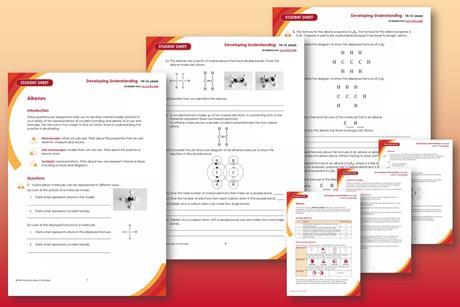
New Chemistry Teaching Resources: Tools for a More Engaging Classroom
Chemistry becomes easier to understand when students can connect abstract ideas to observations, experiments, and everyday life. New teaching resources—from interactive simulations to classroom-ready activities—give educators more ways to make those connections. Used thoughtfully, these tools can support different learning styles, encourage scientific reasoning, and help students build confidence with challenging concepts.
Explore concepts with interactive simulations
Many chemistry topics involve processes that are difficult to see directly, such as the movement of particles, the formation of bonds, or changes in energy. Digital simulations can make these ideas more visible. Students may be able to adjust variables, observe outcomes, and repeat an investigation without using laboratory materials.
Simulations can be useful for introducing a concept, preparing students for a lab, or reviewing a topic afterward. They work best when paired with focused questions. Instead of simply clicking through an activity, students can make predictions, record observations, and explain what the results suggest.
Bring chemistry into everyday contexts
Real-world examples can help students see why chemistry matters. Lessons about acids and bases might connect to food or household products. Discussions of polymers can include clothing, packaging, and medical materials. Environmental chemistry can provide opportunities to examine water quality, air pollution, or the life cycle of common products.
Case studies, short readings, and data sets can help students apply classroom concepts to these issues. The goal is not just to add an interesting example, but to give students a chance to use evidence and chemistry knowledge to explain what is happening.
Make lab learning more accessible
New lab resources can include step-by-step procedures, safety checklists, printable observation sheets, and activities designed for different equipment levels. These supports can help students focus on the purpose of an investigation while learning to work carefully and independently.
Before choosing a lab, educators should review its safety requirements, materials, timing, and accessibility. A strong activity clearly identifies what students will investigate and gives them room to interpret results—not just follow instructions. When a hands-on experiment is not practical, a demonstration, video, or virtual lab may offer a useful alternative.
Support different ways of learning
A flexible collection of resources can help teachers explain the same idea in more than one way. Visual models, vocabulary guides, worked examples, discussion prompts, and practice problems each serve a different purpose. For example, students might first examine a particle-level diagram, then use a model to explain a reaction, and finally apply the idea to a new problem.
It is also helpful to include resources that build scientific communication. Claim-evidence-reasoning prompts, lab-report templates, and peer-discussion activities can guide students as they describe results and support conclusions with evidence.
Choose resources with care
Before bringing a new resource into the classroom, consider whether it:
- Aligns with the lesson’s learning goals and students’ current knowledge.
- Explains scientific ideas accurately and uses clear language.
- Includes meaningful opportunities for students to think, investigate, or practice.
- Works with available devices, lab materials, and classroom time.
- Offers accessible formats and appropriate supports for varied learners.
- Provides guidance for safe and responsible use, especially for laboratory activities.
A resource does not need to be elaborate to be effective. A well-designed diagram, a short investigation, or a carefully chosen data set can prompt rich discussion when it is connected to a clear learning objective.
Use new resources to strengthen teaching
New chemistry teaching resources are most valuable when they complement—not replace—good instruction. Teachers can introduce a tool with a short demonstration, ask students to use it to answer a specific question, and then bring the class together to discuss what they learned. Gathering student feedback can also reveal which resources clarified a concept and which need additional explanation.
By combining hands-on investigations, interactive tools, real-world examples, and thoughtful practice, educators can make chemistry more approachable and meaningful. The right resources help students do more than memorize facts: they help them observe, question, model, and explain the chemistry of the world around them.
9 Tips for Choosing and Using New Chemistry Teaching Resources
- Check new resources against your course standards.
- Preview simulations before assigning them.
- Use virtual labs to reinforce—not replace—hands-on work.
- Verify chemical data with trusted references.
- Choose materials with clear safety guidance.
- Look for accessible formats and captions.
- Pair visuals with short, focused explanations.
- Test digital tools on student devices.
- Ask students for feedback after trying a resource.
Check new resources against your course standards.
Before using a new chemistry teaching resource, check that it supports your course standards and learning objectives. Review the concepts, skills, and level of difficulty it covers, and consider whether it fits your students’ current progress. Choosing resources that align with required standards helps keep lessons focused and ensures classroom activities reinforce what students are expected to learn.
Preview simulations before assigning them.
Preview simulations before assigning them to make sure they’re accurate, easy to navigate, and appropriate for your students’ age and experience. Check that the controls work as expected, the instructions are clear, and the activity supports your learning goals. Testing the simulation in advance also helps you anticipate technical issues and prepare questions that encourage students to explain what they observe.
Use virtual labs to reinforce—not replace—hands-on work.
Use virtual labs to reinforce—not replace—hands-on work. Simulations let students safely repeat procedures, explore variables, and review concepts before or after a physical experiment. Pair them with real lab activities whenever possible so students also gain experience handling equipment, following safety practices, making observations, and responding to unexpected results.
Verify chemical data with trusted references.
Before using new chemistry teaching resources, verify chemical data against trusted references, such as established textbooks, government science agencies, or reputable professional organizations. Check details like formulas, molar masses, safety information, and reaction conditions, since even small errors can confuse students or create safety risks. Cite the sources you use so students can see how scientific information is checked and supported by evidence.
Choose materials with clear safety guidance.
Choose chemistry teaching materials that include clear, age-appropriate safety guidance. Look for instructions on protective equipment, handling and disposal of chemicals, proper use of lab tools, and what to do in an emergency. Review the guidance before class and make sure it matches your school’s safety policies and available equipment. Clear directions help students develop safe laboratory habits while giving teachers confidence that activities are suitable for the classroom.
Look for accessible formats and captions.
Choose chemistry resources that are accessible to students with different needs and learning preferences. Look for materials that work with screen readers, offer clear layouts and readable text, and include captions or transcripts for videos. Accessible formats help more students follow explanations, participate in activities, and engage with chemistry concepts.
Pair visuals with short, focused explanations.
Pairing visuals with short, focused explanations can make challenging chemistry concepts easier to grasp. A clear diagram, animation, or particle model can show what is happening, while a concise explanation directs students’ attention to the key idea without overwhelming them with information. For example, when teaching a chemical reaction, show how atoms rearrange and briefly explain that the atoms are conserved as new substances form. This combination helps students connect what they see with the scientific reasoning behind it.
Test digital tools on student devices.
Before using a digital chemistry tool in class, test it on the devices students will use. Check that it loads properly, works in the school’s browser, and is easy to navigate on different screen sizes. Confirm that students can access needed features without unexpected logins, downloads, or permissions, and have a backup activity ready in case technical issues arise.
Ask students for feedback after trying a resource.
After trying a new chemistry resource, ask students what helped them understand the topic and what felt confusing or unnecessary. A quick exit ticket, short survey, or class discussion can reveal whether an activity, simulation, or reading supported learning as intended. Use their feedback to adjust instructions, choose follow-up activities, or decide whether the resource is worth using again.