
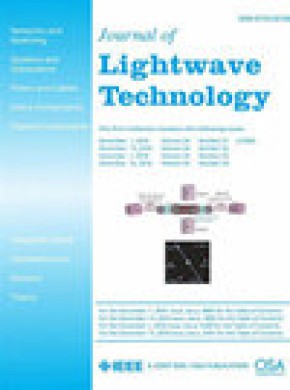
Journal of Lightwave Technology: A Leading Journal in Optical Communications
The Journal of Lightwave Technology (JLT) is a peer-reviewed technical journal focused on the science and engineering of lightwave systems. It covers the technologies that create, transmit, process, and detect light, with particular attention to their use in communications and information networks.
Published jointly by IEEE and Optica, the journal connects research in photonics with practical developments in telecommunications and related fields. Its articles serve researchers, engineers, educators, and industry professionals working to advance optical technology.
What the Journal Covers
JLT publishes research on a broad range of subjects, including:
- Optical fiber and fiber-optic communication systems
- Photonic devices, components, and integrated circuits
- Lasers, optical amplifiers, and detectors
- Optical networks and communication architectures
- Signal processing, modulation, and transmission techniques
- Free-space optical communications and emerging applications
- Modeling, measurement, and performance analysis of lightwave systems
The journal’s scope spans both fundamental research and applied engineering. Published work may introduce new materials or devices, examine system performance, or explore ways to make optical networks faster, more efficient, and more reliable.
Why Lightwave Technology Matters
Lightwave technology uses light to carry and process information. In fiber-optic networks, optical signals can transmit large amounts of data over long distances. This technology supports the internet, data centers, telecommunications networks, and many other services that depend on fast, dependable connections.
As demand for data grows, researchers continue to explore ways to increase network capacity, reduce energy consumption, and improve the performance of optical components. JLT provides a forum for sharing and evaluating this work, helping research findings reach the broader technical community.
Who Reads JLT?
The journal is useful to professionals involved in photonics and communications, including university researchers, graduate students, telecom engineers, and developers of optical components and systems. Its technical articles can also help readers follow new research directions and understand how advances in one area—such as photonic integration—may influence complete communication systems.
A Resource for the Photonics Community
By bringing together research across devices, systems, and networks, the Journal of Lightwave Technology helps document progress in optical communications. It remains an important publication for readers seeking detailed, peer-reviewed work on how light can be used to move and manage information.
7 Essential Tips for Successfully Submitting to a Journal on Lightwave Technology
- Check the journal’s scope before submitting.
- Follow the latest author guidelines.
- Highlight the novelty of your work.
- Use clear figures with readable labels.
- Support results with reproducible methods.
- Cite relevant, recent research.
- Proofread carefully before submission.
Check the journal’s scope before submitting.
Before submitting to the Journal of Lightwave Technology, review the journal’s aims and scope to make sure your manuscript fits its focus on lightwave science, photonics, and optical communications. Check that your topic, methods, and contribution are relevant to its readership, and compare your work with recently published articles. Confirming the fit early can help you choose the right venue and avoid delays caused by a submission that falls outside the journal’s scope.
Follow the latest author guidelines.
Before submitting a manuscript to the Journal of Lightwave Technology, review the latest author guidelines on the journal’s official website. Requirements for formatting, figures, references, manuscript length, and submission files may change, and following the current instructions can help prevent delays in review. Check the guidelines again before uploading your work to ensure your submission is complete and compliant.
Highlight the novelty of your work.
When submitting to the Journal of Lightwave Technology, clearly explain what is new about your work and why it matters. Identify the gap your research addresses, then distinguish your approach and results from prior studies. Be specific about the technical contribution—such as a new device design, method, system architecture, or performance improvement—and support your claims with relevant comparisons or evidence. A concise statement of novelty helps editors and reviewers quickly understand the work’s significance and its contribution to lightwave technology.
Use clear figures with readable labels.
Use clear, well-organized figures to help readers understand your research. Choose readable labels, consistent fonts, and sufficient contrast so that details remain easy to see, even when figures are reduced for publication. Make sure each figure is accurately described in the text and caption, and avoid including unnecessary visual elements that could distract from the results.
Support results with reproducible methods.
Support results in the Journal of Lightwave Technology with reproducible methods so readers can understand, verify, and build on your work. Clearly describe experimental setups, materials, measurement procedures, data-processing steps, and relevant software or equipment settings. When possible, share datasets, code, and calibration details, and report enough information for another researcher to repeat the study and assess its results.
Cite relevant, recent research.
When writing about the Journal of Lightwave Technology, cite relevant, recent research to support technical claims and give readers a current view of the field. Prioritize peer-reviewed articles from the journal and related publications, and verify each source’s authors, title, publication date, and DOI. Recent studies can help illustrate developments in optical communications, photonic devices, and network design, while foundational references may provide context where needed.
Proofread carefully before submission.
Before submitting a manuscript to the Journal of Lightwave Technology, proofread it carefully to catch spelling, grammar, formatting, and technical errors. Check that equations, figures, tables, references, and units are accurate and consistent, and confirm that the manuscript follows the journal’s submission guidelines. A thorough final review can make your work clearer and help prevent avoidable delays during the review process.